Walmart Labs
Agreement Management, end to end
Walmart Agreement Management: the lifecycle of supplier agreements — onboarding, contracts, renewals — rebuilt from beta after six phases of research, and launched to 5,000 users at NPS 67.
Impact
- 67
- NPS
- 6.2/7
- Ease of use
- 6.3/7
- Average satisfaction
- 5,000
- Users at launch
Case snapshot
The situation
A beta was live, and nobody knew which of its problems were the expensive ones.
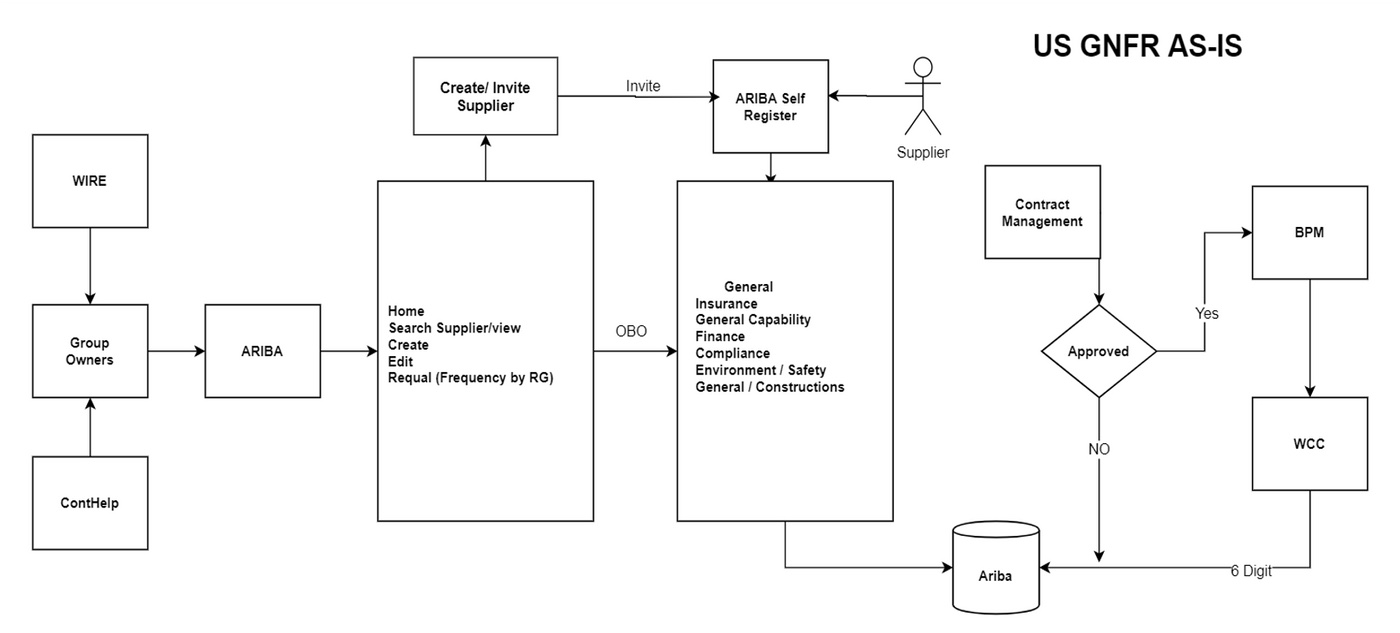
Walmart’s legal agreement process with its suppliers was conceived and built for a world that predated omnichannel retail. Walmart Enterprise set out to redesign it as modular agreements that address the key pains and support omnichannel retail — and the new contract model needed a new application to power it.
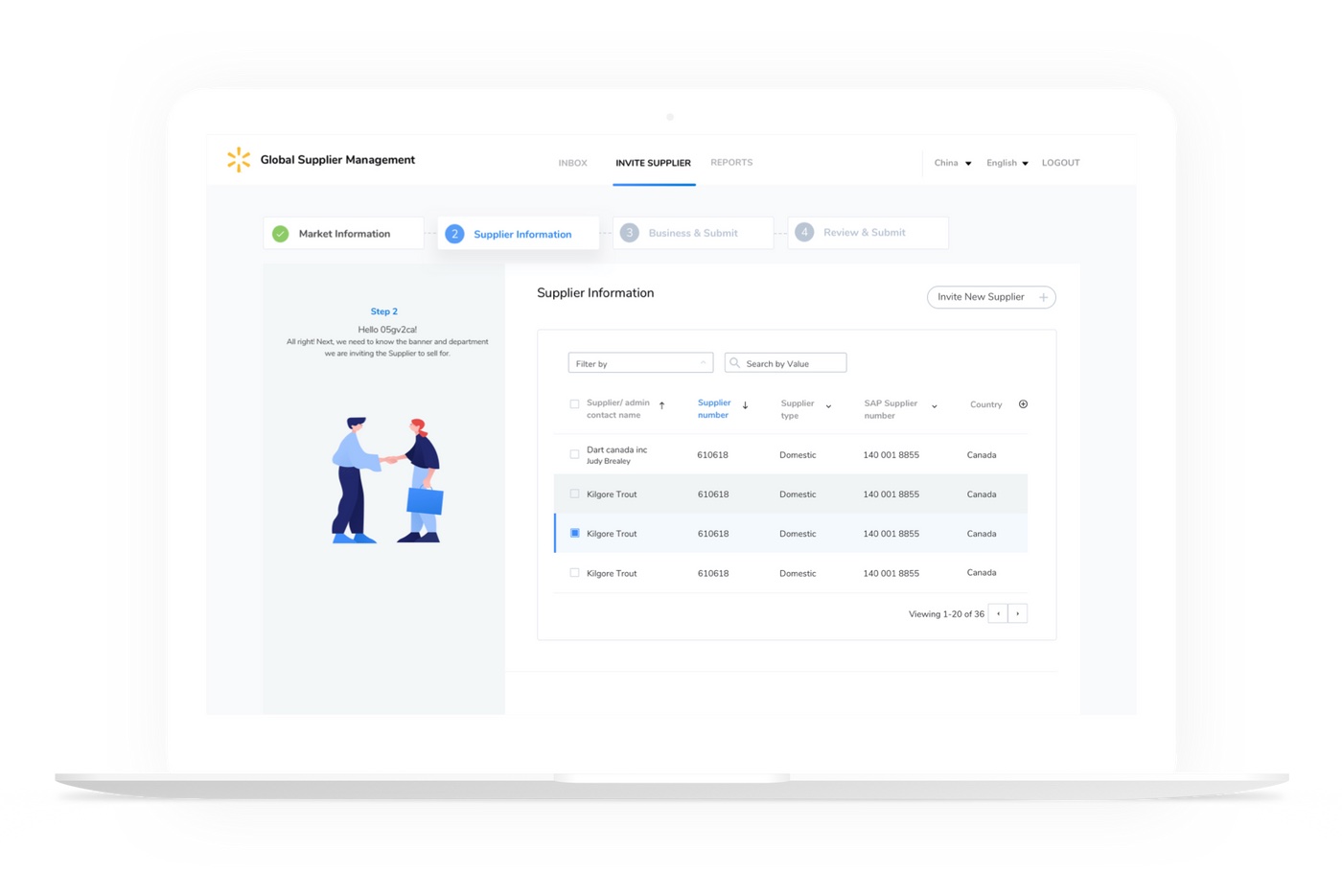
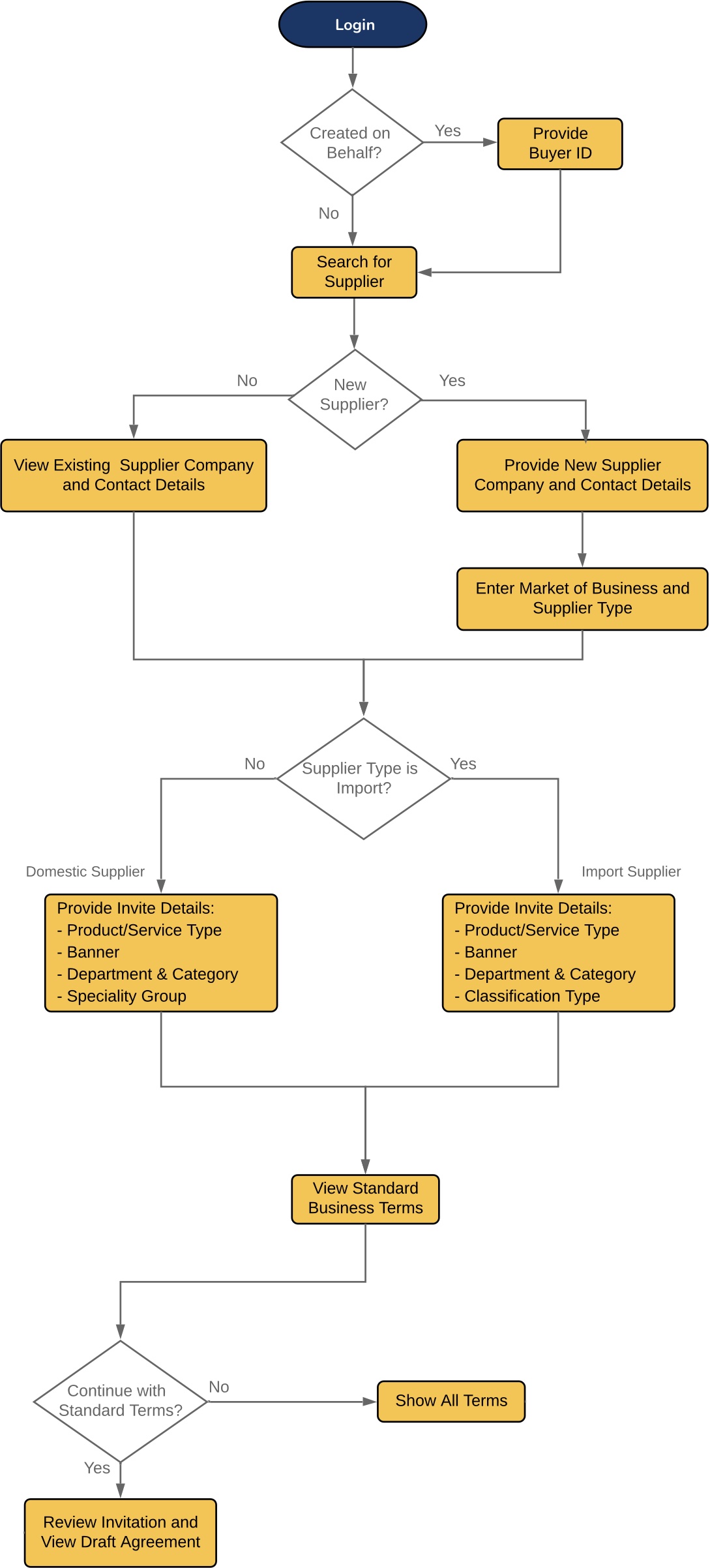
The Agreement Management Application manages that lifecycle: searching and onboarding existing suppliers, inviting new ones, retrieving supplier contracts, creating and renewing agreements, and holding contextual conversations with everyone involved in an agreement, finance and legal included.
This project’s brief: identify the usability issues in the beta release, and decide which features were critical to prioritise for the next iteration.
What made it hard
Ambiguity
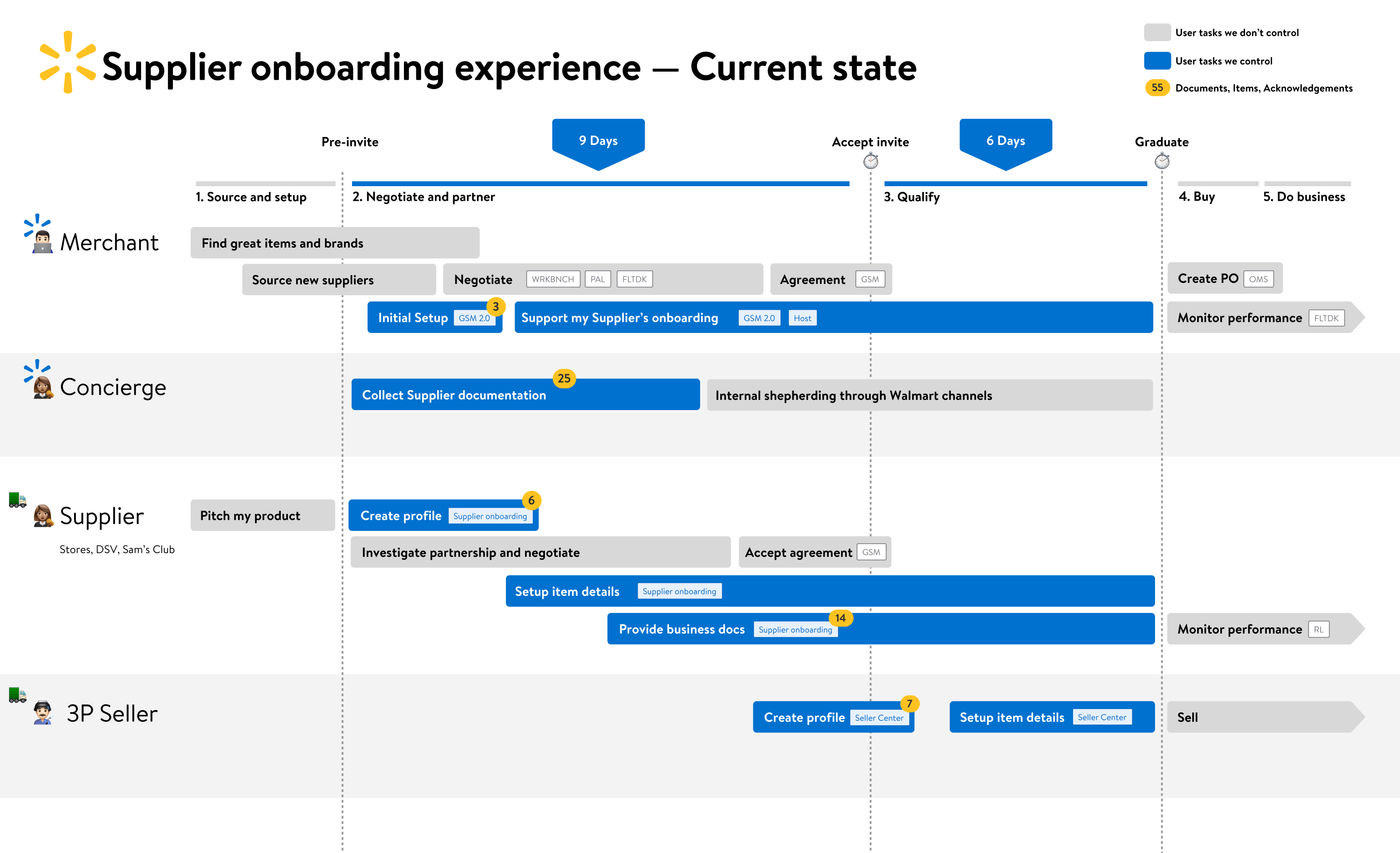
Users could not tell what state an agreement was in, or what was expected of them next.
Slow processes
A long, manual process with too many cycles between buyers, suppliers and support.
No traceability
Tracking was limited where it existed at all — hard to know where the ball was.
Too much information
Suppliers were overwhelmed by the amount of information and Walmart-specific jargon.
My scope
Research, interaction, visual, prototyping and testing — on a system wired to eight others.
- What I owned
- User research, interaction design, visual design, prototyping and testing — user interviews, personas, site maps, competitive research, wireframes, high-fidelity design and prototype, and design specifications.
- The surface area
- AMA serves 15 distinct user types and talks to 8 different applications. Every flow had to hold for a supplier onboarding themselves, a buyer chasing progress, and the finance and legal functions attached to the agreement.
- Who I worked with
- Stakeholders, subject-matter experts and the users themselves — buyers, buyer assistants, suppliers and master-data associates — through interviews and observation.
The hard call
Two sides of the same transaction, wanting different things.
The research produced four personas. Carol, a buyer, needed supplier onboarding to be faster, status tracking throughout, and a way to delegate work to a proxy. Michael, her assistant, wanted the manual process automated and one place to see where every supplier stood. John, a supplier, needed a single place to register with Walmart, notifications on approvals and requests, and less jargon. Amy, a master-data associate, needed to stop incomplete or inaccurate supplier information before it was submitted.
I made Carol the primary persona and John the secondary. The buyer is the one who starts every agreement, so her goals set the structure; the supplier’s needs — clear status, plain language, fewer document cycles — became the requirements every buyer-side flow had to meet.
Suppliers need to be able to onboard themselves as smoothly as possible.
From the vision statement
How the work got made
Six phases of research before a single screen.
The research
Kickoff and literature
Kickoff meetings, then a literature review of the domain.
Audits
Product, prototype and competitive audits.
Interviews
Stakeholder interviews, then subject-matter expert interviews.
Observation
User and customer interviews, and watching them work.
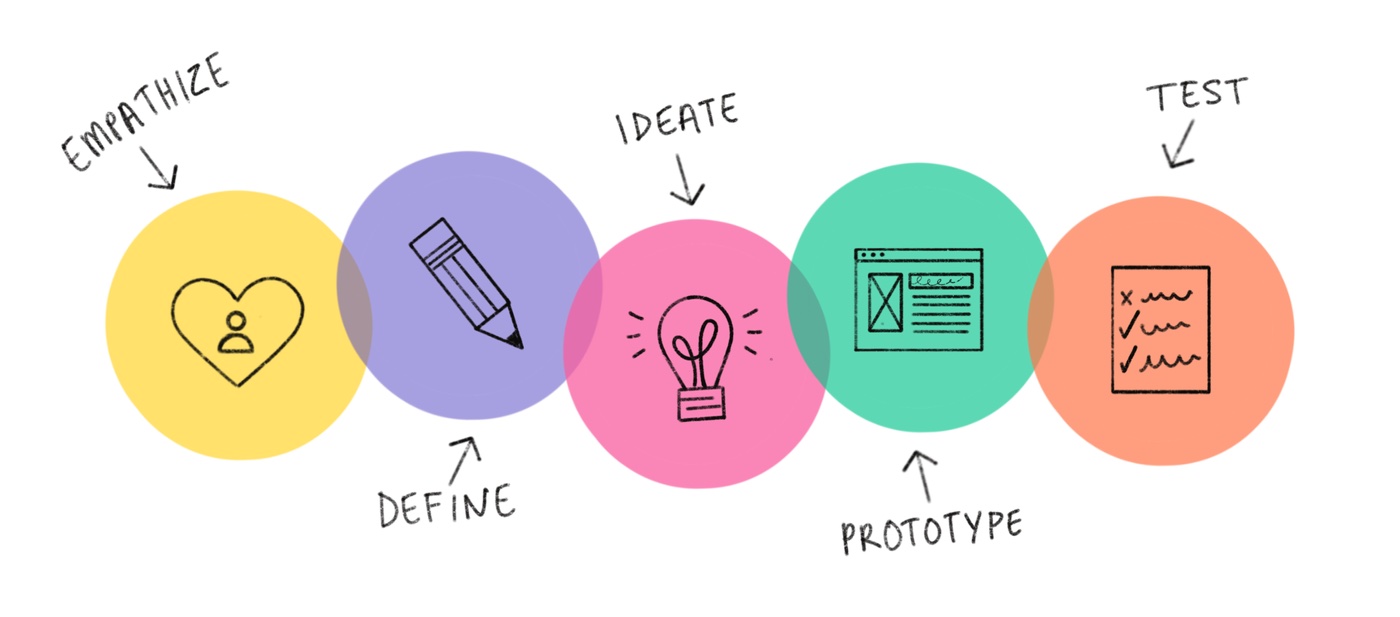
From there the method was goal-directed design: problem and vision statements, context scenarios built around the personas, design requirements, then the interaction framework — sketches, wireframes, key path scenarios and validation scenarios for the edge cases — before refining to full-resolution screens and testing them with users.
The craft
What the application lets people do.
The shipped surfaces
Onboarding
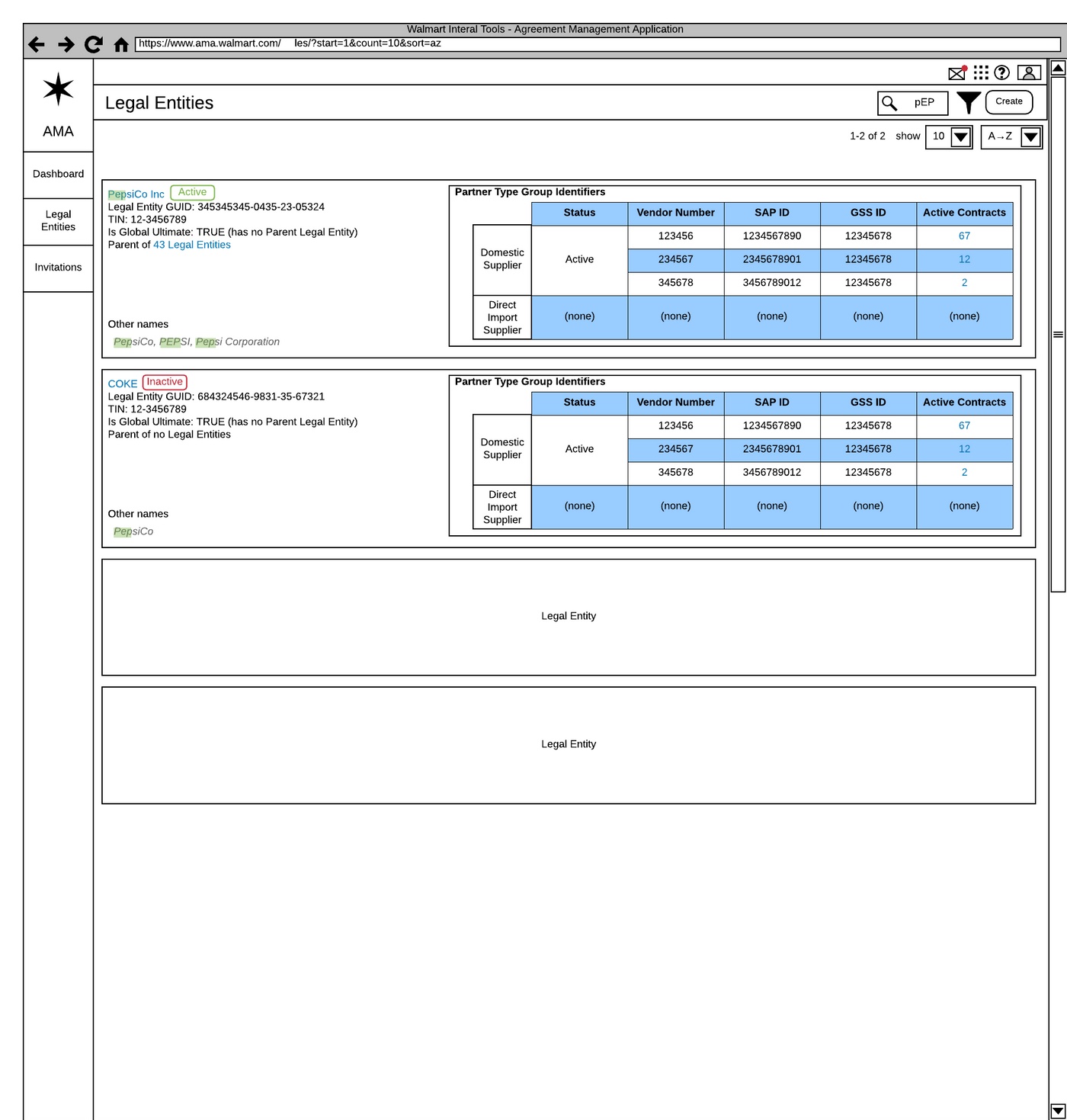
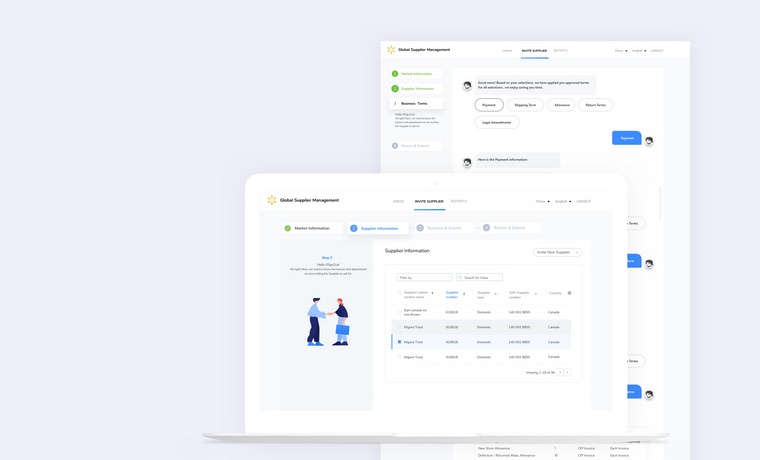
Search and onboard existing suppliers; invite new suppliers to onboard.
Contracts
Retrieve supplier contracts; create and renew agreements.
Conversation
Contextual messaging throughout onboarding, with every party involved in an agreement.
Status
Supplier onboarding status, especially through the contract phase.
Impact
It launched on 8 October 2020 and was measured.
- 67
- NPS
- 6.2/7
- Ease of use
- 6.3/7
- Average satisfaction
- 5,000
- Users at launch
Scores from moderated UserZoom sessions with users.
For the detailed case study, reach out to me (opens Gmail in a new tab).